

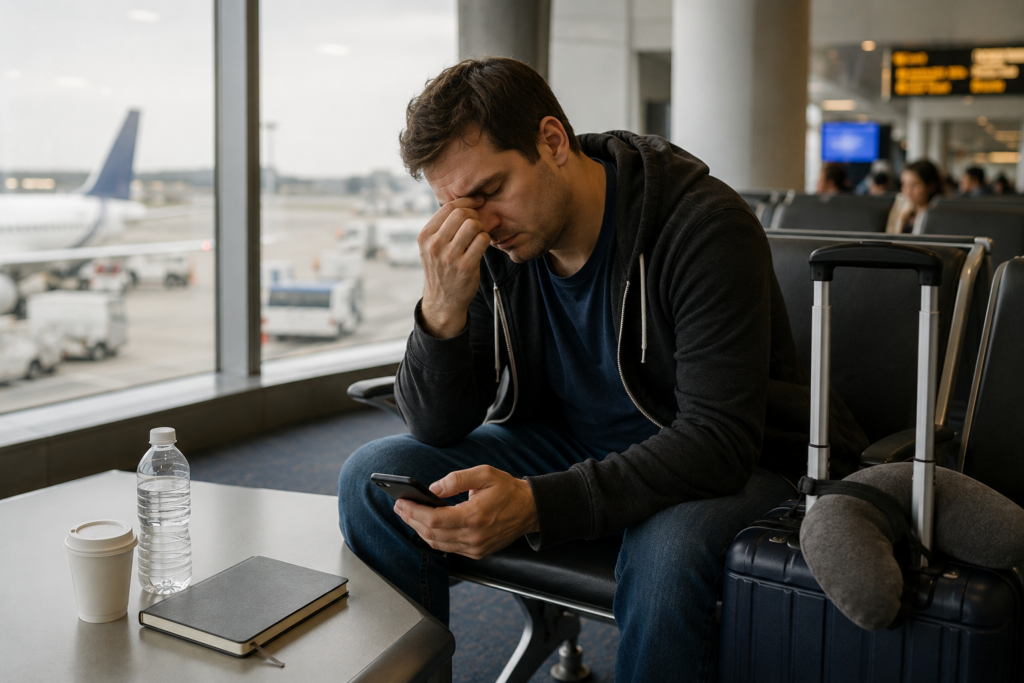
Travel can be exciting, but getting from one place to another isn’t always easy on your energy levels. Early departures, long drives, crowded airports, changing time zones, and disrupted routines can leave even experienced travelers feeling tired and unfocused. Whether you’re traveling for business, heading out on vacation, or spending hours on the road, travel fatigue can make it harder to enjoy the journey and arrive feeling ready for what’s next.
Fortunately, understanding why travel fatigue happens can make it easier to prepare. From getting enough sleep before departure to staying hydrated and using caffeine strategically, a few simple habits can help you maintain your energy throughout a busy travel day.
Travel fatigue isn’t always caused by one specific factor. Instead, it’s usually the result of several changes happening at the same time. Travelers often wake up earlier than usual, spend long periods sitting, eat at irregular times, and experience changes to their normal sleep schedules. Even navigating airports, dealing with traffic, or keeping track of luggage and reservations can contribute to mental exhaustion.
Long periods of inactivity can also make you feel sluggish. Sitting in an airplane seat or vehicle for several hours doesn’t necessarily feel physically demanding, but your normal movement and routine have been interrupted. Add an early alarm or a late arrival, and it’s easy to understand why energy levels can begin to drop.
One of the best ways to manage travel fatigue is to prepare before leaving home. It can be tempting to stay up late packing the night before a trip, but starting your journey already exhausted makes maintaining energy much more difficult.
Try to complete packing and other preparations early enough that you can maintain your normal bedtime. Organizing tickets, identification, chargers, medications, and other essentials in advance can also make departure day less stressful. The goal isn’t necessarily to change your entire routine before traveling. Instead, focus on reducing unnecessary stress and giving yourself the opportunity to begin your trip feeling rested.
Travelers frequently forget to drink enough water, especially when they’re focused on reaching a destination. Air travel can be particularly dehydrating because aircraft cabins have relatively low humidity. Long drives can create a similar problem when people intentionally limit fluids to avoid making additional stops.
Keeping water available throughout the trip can help you maintain your normal hydration habits. Drinking water regularly is especially important if you’re also consuming caffeinated beverages or supplements. While hydration alone won’t eliminate travel fatigue, it is an important part of helping your body function normally during a demanding day.
For adults who already use caffeine, caffeine pills offer several practical advantages during travel. Unlike coffee, they don’t require finding a café, waiting in line, carrying a hot beverage, or making an additional stop during a road trip. They also provide a clearly labeled amount of caffeine per serving, making it easier to keep track of how much caffeine you’re consuming.
Caffeine can temporarily increase alertness and reduce feelings of fatigue, which can be useful during early mornings, long travel days, or periods when you need to remain focused. Caffeine pills are also small and portable, making them easy to keep with other travel essentials. When used according to the product directions, they can provide a simple alternative for adults who want caffeine without another coffee or energy drink. However, remember to count caffeine from all sources and avoid taking more than directed.
Timing becomes especially important when you’re traveling. Caffeine can remain in your system for several hours, so taking it late in your travel day may make it more difficult to sleep once you reach your destination.
Consider when you’ll need to be most alert and when you plan to sleep. Someone catching an early morning flight may have very different caffeine needs than someone arriving at a destination late at night. If you’re crossing time zones, it may also be useful to think about the local schedule at your destination rather than continuing to operate entirely according to the time back home.
Using caffeine strategically can help support alertness without unnecessarily interfering with the sleep you’ll need to recover from your journey.
Driving requires sustained attention, and fatigue behind the wheel should always be taken seriously. If you’re taking a long road trip, plan regular stops rather than trying to cover the entire distance without breaks.
Getting out of the vehicle gives you an opportunity to stretch, walk around, drink water, eat something, and mentally reset before continuing. If you’re traveling with another capable driver, consider sharing driving responsibilities.
Caffeine may temporarily support alertness, but it isn’t a substitute for adequate sleep. If you’re struggling to keep your eyes open, drifting from your lane, missing exits, or having difficulty remembering the last few miles, don’t try to push through the fatigue. Find a safe place to stop and rest.
Heavy meals and irregular eating can contribute to that sluggish feeling many people experience while traveling. Airports and highway stops can also make it tempting to rely entirely on snacks and convenience foods.
When possible, plan meals that provide a combination of protein, carbohydrates, and other nutrients. Packing simple snacks can make it easier to avoid going for long stretches without eating. Nuts, fruit, crackers, sandwiches, and similar travel-friendly options can be useful depending on your transportation method and destination.
Regular meals, hydration, and thoughtful caffeine use can work together to support more consistent energy throughout the day.
Travel fatigue doesn’t always disappear immediately after you arrive. Long-distance travel and changes in time zones can disrupt your normal sleep-wake cycle, potentially leading to jet lag.
If possible, avoid packing your first day with demanding activities immediately after a long journey. Give yourself time to settle in, eat, hydrate, and adjust to the local schedule. Exposure to daylight and following local meal and sleep times can also help your body adapt to the new routine.
For business travelers, arriving with enough time to rest before an important meeting or event can make the experience much more manageable.
The best way to prepare for travel fatigue is to think about energy management before your journey begins. Get sufficient sleep, organize your travel essentials in advance, stay hydrated, eat regularly, and schedule breaks when possible. If caffeine is already part of your routine, consider when it will be most useful rather than consuming it automatically throughout the day.
Small decisions can make a noticeable difference during a long trip. You may not be able to eliminate every delay, early departure, or uncomfortable seat, but you can prepare your body and schedule to handle those challenges more effectively.
Travel days can be unpredictable, and maintaining alertness can help you stay focused on everything from navigating an airport to managing a packed itinerary. Jet Alert provides adults with a convenient, measured source of caffeine that can easily fit into a travel routine without requiring another coffee or energy drink. Always follow the product label, consider caffeine from all sources, and remember that caffeine isn’t a replacement for proper sleep. With thoughtful preparation and responsible caffeine use, you can spend less of your trip battling fatigue and more time enjoying where the journey takes you.



