

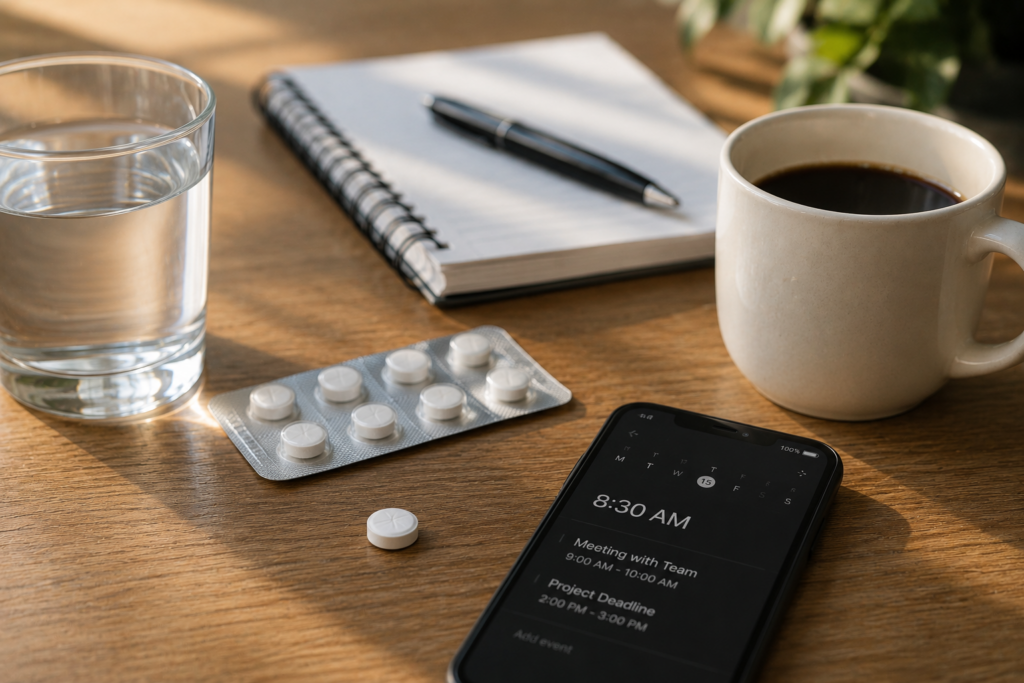
Caffeine is one of the most widely used stimulants in the world, helping people feel more awake and alert during busy days, long work shifts, study sessions, travel, and other demanding situations. While coffee and energy drinks are common sources of caffeine, caffeine pills provide a convenient alternative because they deliver a measured amount without requiring a beverage.
If you’re considering caffeine pills, one of the most important things to understand is how long their effects may last. There isn’t one exact answer that applies to everyone. The amount of caffeine consumed, individual sensitivity, metabolism, medications, and even the time of day can influence how long caffeine remains noticeable.
Understanding the general timeline can help you use caffeine more responsibly and avoid unintentionally consuming it too close to bedtime.
Caffeine pills don’t produce their full effects immediately after they’re swallowed. Caffeine is absorbed through the digestive system and gradually enters the bloodstream. Many people begin noticing increased alertness within roughly 15 to 45 minutes, although timing varies.
Blood caffeine levels generally peak within about an hour after consumption. Because caffeine pills provide caffeine in a concentrated form, it’s important to follow the directions on the product label rather than taking additional tablets simply because you don’t feel an immediate effect.
Waiting for the caffeine to take effect can help prevent accidentally consuming more than intended.
The noticeable effects of caffeine can last for several hours. For many adults, increased alertness may be noticeable for approximately three to six hours, but there can be considerable individual variation.
Some people metabolize caffeine relatively quickly and notice the effects wearing off sooner. Others are more sensitive and may continue feeling stimulated much later in the day. The amount consumed also matters. A higher caffeine intake may produce stronger or longer-lasting effects, but more caffeine isn’t necessarily better.
Understanding your own response is an important part of deciding when caffeine fits into your routine.
One reason caffeine can affect you for several hours is its relatively long half-life. In healthy adults, caffeine’s average half-life is often around five hours, although estimates vary and individual circumstances can make it shorter or considerably longer.
A half-life describes how long it takes the body to eliminate approximately half of a substance. For example, if someone consumes 200 milligrams of caffeine and has a five-hour caffeine half-life, approximately 100 milligrams could still remain in the body five hours later. Several hours after that, an additional portion can still remain.
This is why caffeine consumed in the afternoon or evening can sometimes interfere with sleep even after the obvious feeling of stimulation has faded.
Two people can take the same amount of caffeine at the same time and experience very different results. Genetics and individual metabolism play significant roles in how quickly caffeine is processed.
Regular caffeine consumption can also affect how noticeable its effects feel. Someone who regularly consumes caffeine may develop some tolerance, while a person who rarely consumes it may experience stronger effects from the same amount.
Certain medications and health factors can change caffeine metabolism as well. Pregnancy can significantly increase the amount of time caffeine remains in the body. Anyone who is pregnant, nursing, taking medication, has a medical condition, or has concerns about caffeine should talk with a healthcare professional about appropriate intake.
Yes. Even when you no longer feel especially energized, caffeine may still be circulating in your body and affecting your ability to sleep.
Research has shown that caffeine consumed several hours before bedtime can interfere with sleep in some people. That’s why timing matters. If you normally go to bed at the same time each night, consider how your caffeine intake fits into that schedule and pay attention to whether afternoon consumption makes falling asleep more difficult.
Caffeine also isn’t a replacement for sleep. Using increasingly large amounts to compensate for ongoing sleep deprivation can create an unhealthy cycle in which caffeine interferes with sleep, leading to greater fatigue and more caffeine consumption the following day.
When using caffeine pills, checking the amount of caffeine per tablet is especially important. Unlike a beverage that may be consumed gradually, a tablet can deliver a substantial dose all at once.
For most healthy adults, the FDA has cited 400 milligrams per day as an amount not generally associated with negative effects, but sensitivity varies significantly. That number shouldn’t be interpreted as a target or recommendation to consume 400 milligrams every day.
Remember to count caffeine from all sources. Coffee, tea, soda, energy drinks, chocolate, certain foods, and other supplements can contribute to your total daily intake. Following the caffeine pill’s label instructions and keeping track of your overall consumption can help prevent accidentally taking more than intended.
Because caffeine can remain in the body for hours, thoughtful timing is often more useful than simply consuming more. If you know you’ll need additional alertness for a particular activity, consider the time you need to be focused as well as when you plan to sleep afterward.
It’s equally important to recognize when tiredness means you need rest. Proper sleep, hydration, regular meals, physical activity, and breaks all contribute to maintaining energy and concentration. Caffeine can complement these habits, but it shouldn’t replace them.
For safety-sensitive activities such as driving, caffeine should never be treated as a substitute for adequate sleep. If you’re too tired to drive safely, stop driving and rest.
So, how long do caffeine pills last? While many people may notice the effects for several hours, caffeine itself can remain in the body much longer. Individual metabolism, dosage, sensitivity, and other factors all influence the timeline.
Paying attention to how caffeine affects your energy and sleep can help you determine the timing that works best for your routine. Start by following the product directions, account for other sources of caffeine, and avoid assuming that a fading energy boost means the caffeine has completely left your system.
Jet Alert offers a convenient caffeine option for adults who want a measured alternative to coffee or energy drinks. Whether you’re preparing for a demanding workday, studying, traveling, or managing a busy schedule, understanding how long caffeine lasts can help you make more informed decisions about when to use it. Always follow the directions on the Jet Alert product label and use caffeine responsibly as part of a balanced routine.



